

For a while now, social media has been captivated by the idea of old money. TikTok became obsessed with linen shirts, horsebit loafers, striped Oxford button-downs, cable-knit jumpers, Ralph Lauren interiors, and the sort of visual language associated with East Coast wealth and European aristocracy. It felt like every corner of the internet contained some sort of glorification of this social language. What made the trend particularly fascinating was that it marked one of the first moments when elite aesthetics became truly accessible to the masses. A Zara blazer could mimic a blazer worth thousands. A £30 knit jumper could evoke the same visual references as one from Loro Piana. The internet effectively democratised the appearance of privilege.
As fashion historian Valerie Steele has noted throughout her work on dress and class, elite groups have historically responded to imitation by shifting the markers through which status is communicated. Once a signifier becomes widely accessible, it loses some of its power to distinguish. This process has repeated itself throughout centuries of fashion history, from aristocratic dress codes to luxury branding. The moment the masses learn the visual language, the upper classes begin speaking a different dialect.
This is where the animals arrive.
Not because wealthy people suddenly developed a collective passion for ducks, but because ducks cannot be dupe-cultured.
You can purchase a cream cashmere jumper that resembles one worn by a billionaire. You cannot purchase the conditions required to casually wander around a property carrying livestock unless you possess something increasingly scarce in modern economies: land. What animals communicate online is not merely wealth but a particular kind of wealth, one rooted in ownership, permanence, and space. Their appearance marks a subtle shift away from status symbols that can be bought and towards status symbols that must be maintained.
This shift feels especially revealing when viewed against the backdrop of contemporary economic instability. Younger generations have inherited soaring housing costs, increasingly unattainable home ownership, stagnant wages, and a growing sense that traditional routes towards financial security are narrowing. In Britain, the USA, and much of Europe, property ownership has become one of the most powerful dividing lines between those accumulating wealth and those simply surviving. In that context, the farm becomes something far more significant than an aesthetic backdrop. It becomes a stage upon which class distinction is quietly performed.
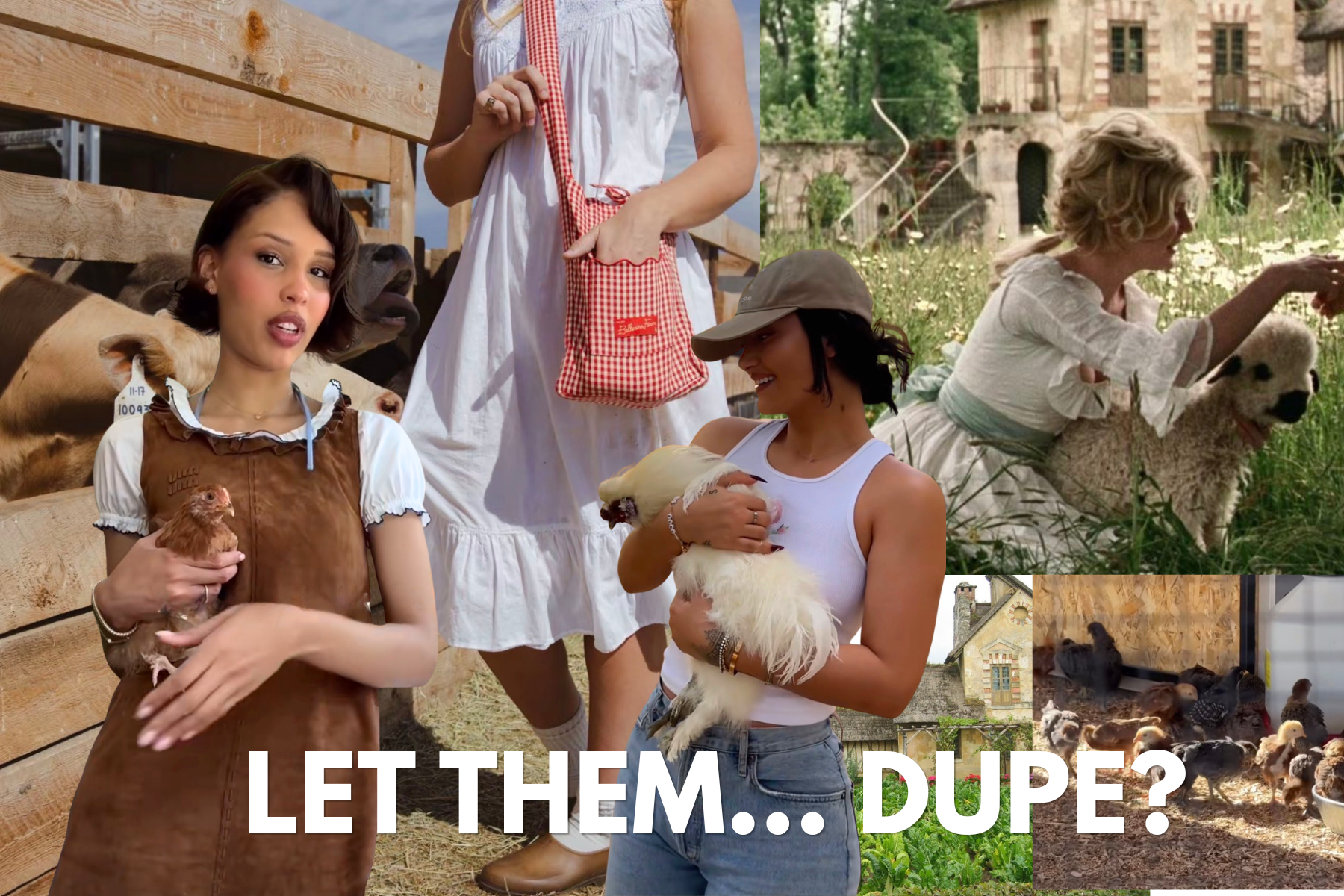
The popularity of creators such as Nara Smith, Ballerina Farm, and Leah Kateb illustrates this dynamic particularly well. Their animals are rarely presented as productive assets in the traditional agricultural sense. Instead, they function as part of a broader visual ecosystem that signals abundance. A duck wandering through a cooking video or a horse grazing in the background of a photograph communicates that the creator exists within a spatial reality fundamentally different from that of most viewers. The animal itself is almost incidental. What matters is everything required to make its presence seem ordinary.
The sociologist Pierre Bourdieu argued that distinction operates through taste, but taste itself is often inseparable from access. People tend to interpret preferences as personal choices when they are frequently shaped by material circumstances. The current fascination with farm life often disguises this relationship. Social media presents rural living as a lifestyle preference, yet the ability to embrace that lifestyle often depends upon resources unavailable to most people. What appears as simplicity is frequently underwritten by considerable wealth.
There is something almost cyclical about this phenomenon. Historically, elites have often embraced forms of rusticity precisely because they could afford to. Marie Antoinette famously played pastoral life in her mock village at Versailles. Nineteenth-century aristocrats romanticised country estates while agricultural workers endured actual hardship. The contemporary influencer farm belongs to this tradition of aestheticised rurality, transforming labour into imagery and necessity into aspiration.
What makes the current moment unique is the extent to which these performances unfold against widespread economic anxiety. During periods of prosperity, wealth tends to display itself through excess. During periods of uncertainty, wealth often presents itself through escape. The fantasy offered by contemporary farm content is not one of extravagance but insulation. Viewers are invited into worlds that appear untouched by rent increases, overcrowded housing markets, unstable employment, or the broader insecurities shaping everyday life.
This helps explain why animals have become such effective status symbols. A luxury handbag may communicate spending power, but a small farm communicates immunity. It suggests a life buffered from many of the pressures defining modern existence. The animals become evidence of a larger claim: not simply that one possesses money, but that one possesses enough money to organise life according to entirely different rules.
What is particularly striking is how gentle this form of status signalling appears. Previous eras of conspicuous consumption often relied upon overt displays of wealth. The contemporary version is considerably softer. A duck feels approachable. A vegetable garden feels wholesome. Chickens feel authentic. Yet this apparent authenticity may be precisely what makes the symbolism so powerful. The performance no longer resembles wealth in its traditional form. Instead, it resembles a rejection of wealth while quietly depending upon its benefits.
The old-money trend inadvertently accelerated this transition. Once the visual codes of elite fashion became widely understood and widely replicated, they lost some of their exclusivity. Wealth therefore migrated towards indicators that could not be copied through online shopping. Land, property, acreage, livestock, equestrian culture, private gardens, and self-sufficiency all emerged as powerful alternatives because they remain materially difficult to access. They create a distinction that cannot be manufactured through aesthetics alone.
Seen this way, the duck in the cooking video is not really a duck at all. It is part of an evolving language through which privilege identifies itself. It appears just as social media has made traditional luxury more visible and more imitable than ever before. The upper classes have always relied upon distinction, and distinction only functions when there is a gap between those who possess it and those who do not. As old-money dressing became increasingly available to everyone, wealth simply moved the goalposts once again.
The result is that we now find ourselves living through a strange moment in which some of the most powerful symbols of status are not handbags, watches, or designer labels, but living creatures grazing quietly in the background of a video. The animal itself matters far less than what it reveals. Behind every duck, goat, horse, or chicken is an increasingly scarce luxury that many people desire but few can obtain: enough space, enough security, and enough economic freedom for ownership itself to look effortless.
References
Bourdieu, Pierre. Distinction: A Social Critique of the Judgement of Taste. Harvard University Press, 1984.
Piketty, Thomas. Capital in the Twenty-First Century. Harvard University Press, 2014.
Veblen, Thorstein. The Theory of the Leisure Class. Oxford University Press, 2007 (originally published 1899).
Bell, David and Valentine, Gill. Consuming Geographies: We Are Where We Eat. Routledge, 1997.
Goodman, David and Redclift, Michael. Refashioning Nature: Food, Ecology and Culture. Routledge, 1991.
Wilson, Bee. The Way We Eat Now. Fourth Estate, 2019.
Journal of Rural Studies.
Sociologia Ruralis.
American Journal of Sociology.
Theory, Culture & Society.
Further Reading
“The Rise of Quiet Luxury” — Vogue.
“The Aesthetics of Wealth in the TikTok Era” — Dazed.
“How Ballerina Farm Became the Internet’s Most Divisive Fantasy” — The Cut.
“Conspicuous Consumption in the Age of Social Media” — Journal of Consumer Culture.
“The Return of Domesticity as Lifestyle Content” — The Atlantic.
“The Class Politics of Cottagecore” — New Statesman.
“The Performance of Authenticity Online” — Social Media + Society.
“The New Leisure Class” by Elizabeth Currid-Halkett.


Leave a Reply